What Kind of Evidence Should You Gather at the Scene of a Collision?
The evidence you collect in the minutes and hours after a car accident becomes the foundation of your entire claim. Once the scene is cleared, the road is swept, and vehicles are towed, critical proof vanishes. That’s why we suggest you gather everything you safely can: photos, videos, witness information, your own written account, and any physical details that might disappear before an investigator arrives.
Laborde Earles Injury Lawyers has recovered over $1 billion for injured Louisianans because we leverage the fact that the clients with the strongest evidence get the strongest results. The insurer's goal is to minimize what they owe you, and your evidence is what stops them.
This guide walks you through exactly what to collect at the scene, what to document in the days that follow, how to preserve evidence that's at risk of disappearing, and when to get an attorney involved to protect what you've gathered.
Terms to Know
- Contemporaneous Notes: A written account created at or very near the time of the event it describes. In legal terms, contemporaneous notes carry more weight than memories recalled weeks or months later because they're considered more reliable. Your notes from the scene fall into this category.
- Event Data Recorder (EDR): Often called a vehicle's "black box," an EDR is an electronic device installed in most modern vehicles that captures data in the seconds before, during, and after a crash. This includes speed, braking, throttle position, seatbelt status, and airbag deployment. EDR requirements are governed by federal regulation under 49 CFR Part 563 by the National Highway Traffic Safety Administration (NHTSA).
- Spoliation of Evidence: The destruction, alteration, or failure to preserve evidence that is relevant to a legal claim. Louisiana courts take spoliation seriously. Under La. C.C.P. art. 1471, trial courts have broad authority to sanction parties who fail to comply with discovery obligations, and La. C.C.P. art. 191 grants courts inherent power to address evidence destruction. The Louisiana Supreme Court has held that intentional spoliation can trigger an adverse presumption, meaning the court may instruct the jury to assume the destroyed evidence was unfavorable to the party who destroyed it.
- Chain of Custody: The documented trail showing who possessed a piece of evidence, when, and what happened to it. A broken chain of custody can make otherwise powerful evidence inadmissible.
- Prescriptive Period: Louisiana's deadline to file a personal injury lawsuit. Under La. C.C. art. 3493.1, enacted by Acts 2024, No. 423 (effective July 1, 2024), you have two years from the date of the accident to file suit.
Evidence Preservation Quick-Reference Checklist
At the scene:
- Call 911 and request a police report
- Photograph and video everything (vehicles, road, injuries, signage, witnesses)
- Exchange information with all drivers
- Get witness names and phone numbers
- Note nearby businesses and cameras that may have footage
- Save your dashcam footage immediately
Within 24 hours:
- Write your contemporaneous account of the accident
- See a doctor, even if you feel fine
- Begin a daily pain and limitation journal
- Save all clothing and personal items damaged in the crash (don't wash or repair them)
- Do not post about the accident on social media
Within the first week:
- Contact a personal injury attorney
- Obtain the police report
- Begin collecting all medical records and bills
- Document missed work and lost income
- Photograph your injuries daily as they develop
Ongoing:
- Keep every piece of medical documentation
- Continue your pain journal
- Preserve all correspondence with insurance companies
- Do not give a recorded statement to the other driver's insurer without your attorney present
- Do not sign anything without legal review
What Evidence to Collect and How
Step 1: Ensure Safety First
Before you do anything else:
- Move to a safe location if you can do so without worsening your injuries
- Call 911 immediately, even for seemingly minor accidents
- Turn on your hazard lights
- Check on other drivers and passengers if you can do so safely
- Do not move your vehicle unless it's blocking traffic and creating a danger
- If you must move it, photograph its position first
La. R.S. 32:398 requires drivers involved in an accident resulting in injury, death, or significant property damage to remain at the scene and report the accident to law enforcement. Leaving the scene of an injury accident is a criminal offense.
Step 2: Contact an Attorney Before Evidence Disappears
Evidence preservation is time-sensitive, and much of it requires legal action your attorney initiates on your behalf. Here’s what your attorney does to protect your evidence:
- Sends spoliation letters to the other driver, their insurer, repair shops, and tow companies, demanding preservation of the vehicle and its EDR data
- Sends preservation requests to businesses with surveillance cameras near the scene
- Subpoenas cell phone records, rideshare data, and GPS logs before they're purged
- Requests the complete police report and any supplemental reports
- Coordinates with accident reconstruction experts if the scene needs to be documented or analyzed
- Files a litigation hold to ensure all relevant evidence is protected throughout the legal process
At Laborde Earles, your first consultation is free. You pay nothing unless we win. And the sooner you call, the more evidence we can protect. Every day that passes is a day that surveillance footage loops, EDR data gets overwritten, and witness memories fade.
Step 3: Call Law Enforcement and Request a Report
A police report creates an official, third-party record of the accident that includes:
- Date, time, and exact location
- Identities of all drivers, passengers, and witnesses
- The responding officer's observations about road conditions, weather, and vehicle positions
- Any citations issued
- A preliminary assessment of fault
In Louisiana, crash reports are maintained by the Louisiana State Police Traffic Records Unit and can be obtained from the investigating agency. Request a copy as soon as it's available.
If police do not respond (which can happen with minor property-damage-only accidents), you can file a report yourself at the nearest law enforcement office. Don't leave the scene without at least attempting to get an official record.
Step 4: Seek Medical Attention to Document Everything
Even if you feel fine, see a doctor within 24 hours of the accident. Some injuries, such as concussions, soft tissue damage, and internal bleeding, don't present symptoms immediately. Additionally, a medical evaluation creates a documented link between the accident and your injuries, making it much harder for the insurance company to dispute.
Preserve the following medical documentation:
- ER records and discharge papers
- Diagnostic imaging results (X-rays, CT scans, MRIs)
- Doctor's notes from every follow-up visit
- Physical therapy records
- Prescriptions and pharmacy records
- Mental health records if the accident caused anxiety, PTSD, or depression
- Referrals to specialists
We also suggest you keep a daily pain and limitation journal. Document:
- What hurts
- What you can't do
- How your sleep is affected
- How your injuries impact your work and daily life
This journal serves as evidence of your non-economic damages, including pain and suffering, and the loss of enjoyment of life. These damages are real, compensable, and often underestimated by insurers.
Step 5: Document the Scene
The goal is to capture everything before the scene changes. Keep this checklist handy:
Vehicle Damage—All Vehicles Involved:
- Wide shots showing the full vehicle and its position on the road
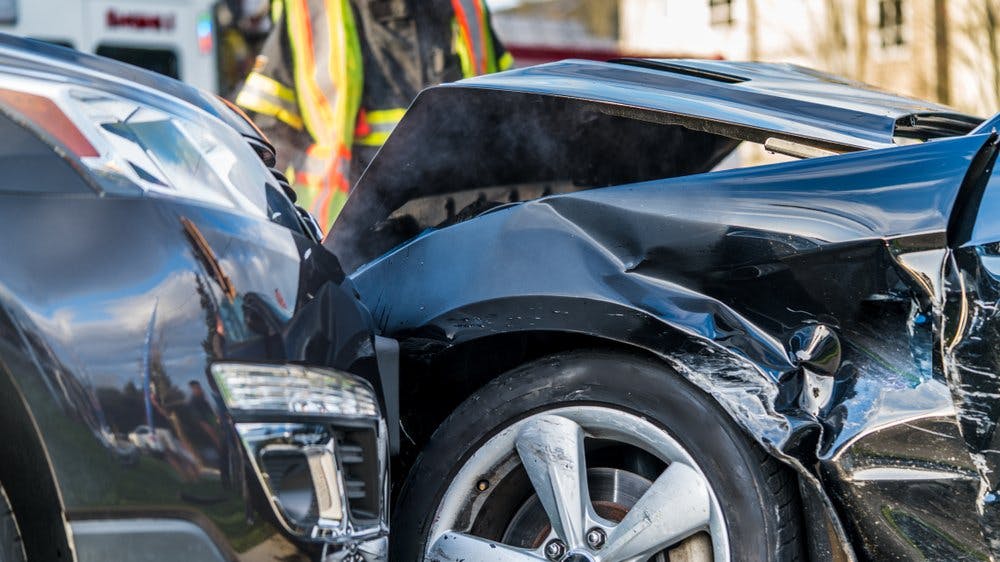
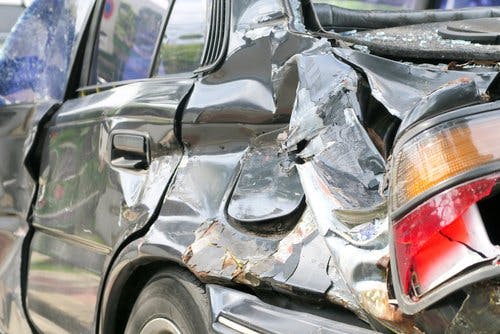
- Close-up shots of every area of damage, including dents, scrapes, broken glass, and deployed airbags
- Undercarriage damage if visible
- Tire marks, flat tires, or blowout debris
- The other vehicle's license plate (front and rear)
- The other vehicle's VIN (visible through the windshield on the driver's side dashboard)
The Scene and Road Conditions:
- The intersection or stretch of road, including a wide-angle showing lane markings, signage, and traffic signals
- Skid marks, gouge marks, or debris patterns on the road
- Road defects such as potholes, uneven pavement, missing signage, and obscured traffic signals
- Weather and lighting conditions at the time of the accident
- Any construction zones, barricades, or detour signage
- Standing water, oil slicks, or other road hazards
Traffic Controls and Signage:
- Traffic lights (and their current signal if visible)
- Stop signs, yield signs, speed limit signs
- Lane markings, including solid, dashed, and turn lanes
- "No Turn on Red," one-way, or other regulatory signs
Your Injuries:
- Visible injuries such as cuts, bruises, swelling, burns, and road rash
- Torn or bloodied clothing
- Medical equipment applied at the scene (neck brace, splint, bandages)
- Continue photographing injuries daily as they develop, as bruising and swelling often worsen over the following days
Contextual Details:
- Nearby businesses that may have exterior security cameras
- Residential doorbell cameras (Ring, Nest, etc.) facing the road
- Traffic cameras at the intersection
- The position of the sun (relevant to glare-related accidents)
Video:
- Walk the entire scene slowly, narrating what you see, including your vehicle, the other vehicle, the road, the debris
- field, and the intersection
- Video captures spatial relationships that photos can miss
- Timestamp everything—most smartphones automatically embed date, time, and GPS data in photo metadata, so make sure your phone's location services and date/time settings are accurate
Step 6: Exchange and Collect Information
Get the following from every driver involved:
- Full legal name
- Phone number and address
- Driver's license number and issuing state
- Insurance company name and policy number
- Vehicle make, model, year, color, and license plate number
Once witnesses leave the scene, they’re extremely hard to find again, and it’s best to speak to them while their memory of the event is still fresh. Collect the following from as many witnesses as possible:
- Full name and phone number
- What they saw
- Where they were standing or positioned when the accident happened
- Whether they'd be willing to provide a written or recorded statement
Finally, get the following from responding officers:
- The officer's name, badge number, and department
- The report number (or how/when to obtain a copy)
Step 7: Document Your Own Account (Contemporaneous Notes)
As soon as you are safely able—ideally the same day—write down everything you remember about the accident as a raw, honest recollection.
Include:
- What you were doing immediately before the collision (speed, lane, direction of travel)
- What you saw the other driver doing, or not doing, as the case may be
- The moment of impact, including where, how, and what you felt
- What happened after the impact, such as where your vehicle ended up and how you felt physically
- Any statements the other driver made, like "I didn't see you," "I was on my phone," "I'm sorry"
- Any statements witnesses made
- The weather, lighting, and road conditions
- How you felt physically and emotionally
Memory degrades rapidly. A peer-reviewed study published in Psychiatry, Psychology and Law found that witnesses who recorded their account within 24 hours produced significantly more accurate and complete recall than those who waited longer, and that the benefit of early documentation lasted at least one month.
Step 8: Preserve Digital and Electronic Evidence
Some of the most powerful evidence in a modern car accident case lives in electronic systems, and it can disappear fast. Your attorney will likely subpoena the following records:
- Event Data Recorder (EDR) data: Most vehicles manufactured after 2014 contain EDRs that record crash data, as required by 49 CFR Part 563. This data can prove speed, braking behavior, and throttle position in the seconds before impact. However, EDR data can be overwritten by subsequent driving events or vehicle repairs. If the at-fault vehicle is being repaired or scrapped, that data is at risk.
- Dashcam and in-vehicle camera footage: If you have a dashcam, save the footage immediately. Most dashcams record in a loop and automatically overwrite old footage. Remove the SD card or transfer the file before it's lost.
- Nearby surveillance footage: Businesses, traffic cameras, and residential doorbell cameras near the accident scene may have captured the collision. This footage is typically stored on short loops, sometimes as little as 24–72 hours. Your attorney can send preservation requests to these businesses before the footage is overwritten.
- Cell phone records: If distracted driving is suspected, cell phone records can show whether the other driver was texting, calling, or using an app at the time of the crash. These records are obtainable through discovery, but your attorney needs to act early to preserve them.
- Rideshare and GPS data: If either driver was using a rideshare app (Uber, Lyft) or GPS navigation at the time of the accident, that data can establish speed, route, and exact time of impact.
What NOT to Do With Your Evidence
Knowing what to protect also means knowing what mistakes to avoid:
- Do not post about the accident on social media: Insurers monitor Facebook, Instagram, TikTok, and other platforms for posts, photos, and check-ins that can be used to undermine your claim. A photo of you smiling at a family dinner can be weaponized to argue your injuries aren't serious. Post nothing, adjust your privacy settings, and tell friends and family not to tag you.
- Do not repair your vehicle before it's been fully documented: Your damaged vehicle is evidence. Once it's repaired, the physical proof of impact severity is gone. Your attorney may need to have the vehicle inspected or photographed by an expert before any repairs begin.
- Do not wash or discard damaged clothing: Torn, bloodied, or debris-covered clothing can corroborate the severity of the collision and your injuries.
- Do not give a recorded statement to the other driver's insurance company: Adjusters are trained to ask questions designed to elicit answers that hurt your claim. You are not legally required to give a recorded statement to the other driver's insurer. Let your attorney handle this communication.
- Do not delete any digital files: This includes photos, texts, emails, and GPS data. Deleting evidence, even unintentionally, can create legal complications.
FAQs: Evidence Collection After a Car Accident
What if I was too injured to collect evidence at the scene?
If you couldn't document the scene, your attorney can work with the police report, witness statements, surveillance footage, EDR data, medical records, and accident reconstruction experts to build your case.
The evidence landscape is broader than what you can personally collect, and an adept attorney knows how to find and preserve all of it.
How long does surveillance footage last before it's overwritten?
It varies widely. Some businesses overwrite security camera footage every 24–72 hours. Others retain it for 30 days or more. Traffic cameras operated by municipalities may have different retention schedules. The critical point is that this footage disappears on a fixed timeline that has nothing to do with your claim. Contact an attorney immediately so a preservation request can be sent before the footage is gone.
Can the other driver's insurance company see my social media?
Yes, and they do. Insurers routinely monitor claimants' public social media profiles for posts, photos, and activity that can be used to dispute injury claims. Even private posts can become discoverable during litigation. The safest approach is to post nothing about the accident, your injuries, or your activities until your case is resolved.
What is an event data recorder and can I access it?
An EDR is an electronic recording device in your vehicle that captures crash data in the seconds surrounding a collision. EDR standards are set by the NHTSA under 49 CFR Part 563. You generally own the data from your own vehicle's EDR, but accessing the other driver's EDR data typically requires a court order or consent. Your attorney can pursue this through discovery.
How long do I have to file a claim in Louisiana?
Under La. C.C. art. 3493.1, Louisiana's prescriptive period for personal injury claims is two years from the date of the accident, effective July 1, 2024. But evidence doesn't wait two years. Surveillance footage, EDR data, witness memories, and physical evidence all degrade or disappear well before that deadline.
Should I talk to the other driver's insurance adjuster?
Not without your attorney. You are not legally required to give a recorded statement to the at-fault driver's insurer. Adjusters are trained to ask questions that elicit admissions or minimize your injuries. Let your attorney handle all communication with the opposing insurer from the start.
What if the police report contains errors?
Police reports are not infallible. If the report contains factual errors—wrong direction of travel, incorrect witness information, an inaccurate fault determination—your attorney can supplement the record with independent evidence. A flawed police report is not the end of your case, but it is a reason to build a strong independent evidence file.
What does my attorney do to preserve evidence that I can't?
Your attorney sends formal spoliation letters and preservation demands to parties who control relevant evidence: the other driver, their insurer, tow companies, repair shops, businesses with surveillance cameras, and cell phone carriers. Your attorney can also subpoena records, coordinate with accident reconstruction and medical experts, file court orders to preserve vehicles and electronic data, and ensure a proper chain of custody is maintained for all evidence. This is time-sensitive legal work that begins the day you retain counsel.
Your Voice is Our Voice
If you've been in an accident, the most important step you can take after ensuring your safety and getting medical care is calling an attorney who will fight to preserve every piece of evidence before it's gone.
At Laborde Earles, we've built our practice on the understanding that evidence wins cases. David Laborde and Digger Earles have spent decades recovering over $1 billion for injured Louisianans. With 1,000+ five-star reviews and offices across Lafayette, New Orleans, Baton Rouge, Lake Charles, Alexandria, Marksville, and New Iberia, we know Louisiana's roads, Louisiana's courts, and Louisiana's insurers.
Contact us today to book your complimentary case consultation. We're available 24/7/365, in English and Spanish, and you pay nothing unless we win.
Disclaimer: This content is for informational purposes only and does not constitute legal advice. Reading this page does not create an attorney-client relationship. If you've been injured, contact a licensed Louisiana personal injury attorney for advice specific to your situation.