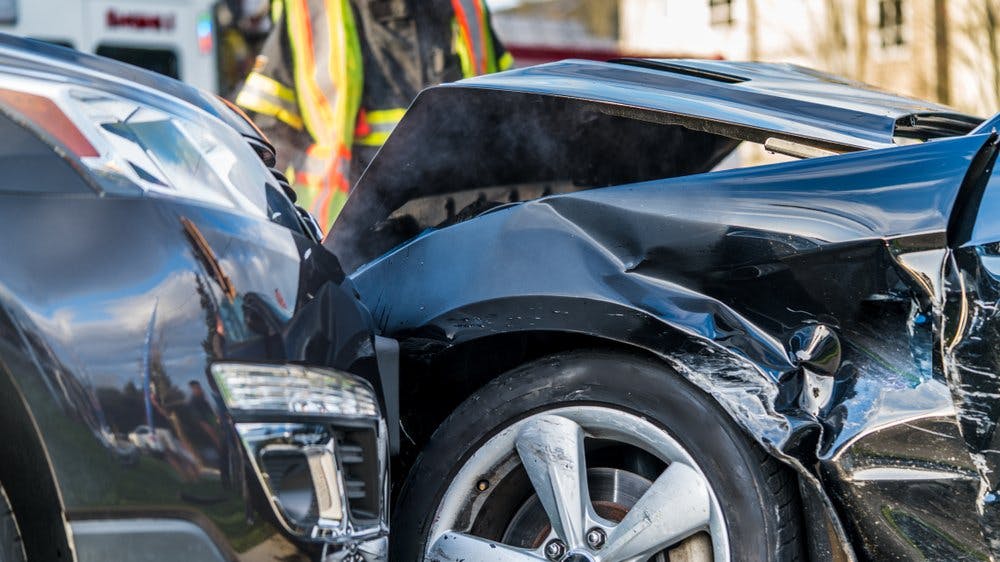
Most Common Head-On Collision Injuries
Head trauma and whiplash are among the common types of injuries resulting from head-on collisions, according to StatPearls. Other injuries can include broken bones, spinal injuries, paralysis, internal injuries, and fatalities. Head-on collisions often produce the most severe injuries of any accident.
Aside from the initial injuries, many ongoing physical problems can follow the victim of a head-on collision for years. You should get medical treatment, even if you feel fine after the accident. Our car accident attorneys can work with you on your case if another party was the cause of your accident.
Injuries From Head-On Collisions Can Be Catastrophic
Head-on collisions are dangerous because two vehicles speeding into one another create a more significant impact force than a side-impact or rear-end crash. Colliding with another car at even a low speed can cause serious injuries to car drivers and passengers.
The strain of the sudden stop while wearing a seat belt is focused on the area where the belt restrains you. Even low-speed collisions can cause broken hips, legs, and arms, head trauma, whiplash, and sometimes death. Severe spinal injuries can result in paralysis.
The following injuries are common in head-on collisions:
Traumatic Brain Injury (TBI)
Traumatic brain injury is a bruising of the brain’s soft tissue. Brain injuries can be closed, where there is no break in the skull, or open, where a skull fracture has occurred. Some TBIs may result in loss of consciousness, headaches, and other more immediately noticeable problems.
In some cases, the effects of a TBI may not appear for several hours or even days after an accident. The symptoms of a TBI can include:
- Dizziness
- Blurred vision
- Slurred speech
- Loss of consciousness
- Coma
- Death
If you notice any TBI symptoms, even if you have already seen and been cleared by a medical doctor, you should seek immediate medical care. X-rays and CT scans may not show a TBI immediately, and symptoms may not show until several days after an accident.
TBIs can be mild, such as a concussion, or result in permanent brain damage. Any brain injury must be treated seriously. A TBI can affect the way you move, think, and speak. Although sometimes surgery and rehabilitation can help a victim recover, that is not always the case.
Whiplash
Any accident can result in whiplash. This injury is caused by the rapid snapping motion of the head that occurs on impact. According to the National Institute of Neurological Disorders and Stroke (NINDS), whiplash damage can include:
- Soft tissue damage
- Nerve damage
- Muscle and ligament damage
- Memory loss
- Trouble sleeping
Like a TBI, the symptoms from whiplash may not appear immediately after an accident. Suppose you notice soreness, a stiff neck, or difficulty moving. In that case, you should return to the doctor as soon as possible.
Spinal Injury
Head-on collisions can cause severe spinal injuries and may result in partial or complete paralysis. The impact can cause muscle injury, nerve damage, and damage to the bone structure of the spinal cord.
Spinal injuries can result in debilitating pain or paralysis and can be life-altering. Because adrenaline acts as a pain blocker, the symptoms of a spinal injury may not be noticeable until some time has passed after an accident. You should seek immediate medical care for any of the following:
- Severe back pain
- Pressure in your head, neck, or back
- Weakness or lack of coordination
- Numbness or tingling in your extremities
- Incontinence
- Difficulty breathing
- Odd positioning of your head, neck, or back
Broken Bones
Another common injury from head-on collisions is broken bones. They can range from jammed fingers to complex fractures requiring surgical repair and sometimes result in amputations.
Some of the commonly broken bones include:
- Legs
- Arms
- Ribs
- Wrists
- Pelvis
A secondary hazard from broken bones is internal injuries resulting from bone fragments puncturing organs such as the heart, lungs, liver, and intestines.
Internal Injuries
Internal injuries can happen in many ways during a collision. The sudden stop of forward motion can cause internal organs to shift. Broken bones may penetrate organs and create life-threatening internal bleeding. Internal injuries may not be evident until a doctor completes an exam.
Cuts, Scrapes, Bruises, and Blunt Force Trauma
Any accident can produce cuts, scrapes, bruising, and trauma from impact and flying debris. Inside the vehicle, the force of your body can cause an impact on parts of the car. The impact may cause unsecured items in the passenger compartment to fly around the cabin. Other objects from outside the vehicle may also break windows and hit impact occupants.
Protecting Yourself After a Head-On Collision
Suppose you have been involved in a head-on collision. In that case, discussing your injuries with a personal injury lawyer or car accident attorney may benefit you. They can guide you on matters of compensation for your damages and protect you and your family from financial stress.
The attorneys at Laborde Earles Injury Lawyers know the catastrophic results that a head-on collision can have on your entire family. They will work to ensure that you receive compensation to cover medical expenses and lost wages while you recover from your injuries. Contact our car accident team for more information.