
How to Receive a Fair Settlement Following a Semi-Truck Accident
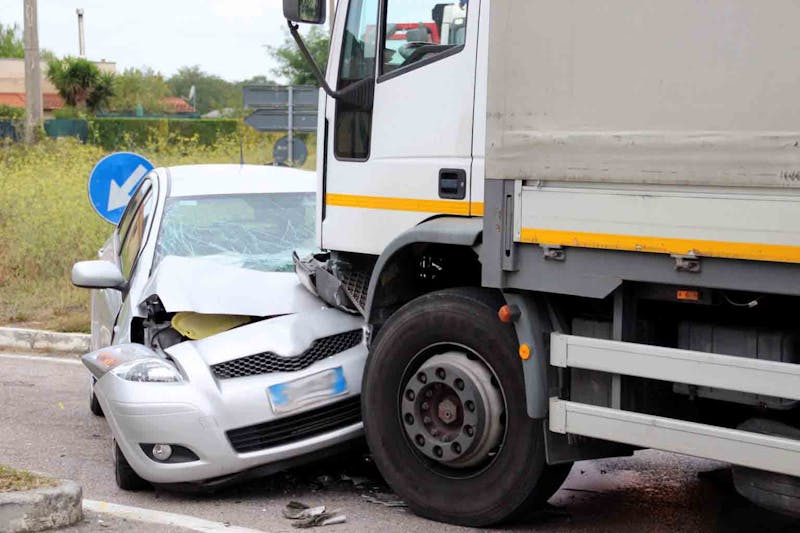
Securing a fair settlement after a semi-truck accident can be more complicated than a typical car accident. Claims often involve multiple parties and federal safety regulations; they require evidence of immediate medical care, strong evidence, and careful handling of insurance companies.
The actions you take early on can have a direct impact on the outcome of your case, and you may face aggressive defense strategies from trucking companies looking to reduce what they pay. That’s why you need a legal team that understands the complexity of trucking cases in order to receive a fair settlement following a semi-truck accident.
Laborde Earles Injury Lawyers has recovered over $1 billion for Louisiana injury victims, including those involved in serious truck accidents. From the start, we move quickly to protect your rights, secure key evidence, and position your case for maximum compensation.
In this blog, we provide a step-by-step guide to the claims and settlement process, clarify what evidence is needed and what you could potentially receive in damages, and discuss our negotiation strategies.
Key Terms in Semi-Truck Accident Cases
- Commercial Motor Vehicle (CMV): A large vehicle used for business purposes, such as semi-trucks and 18-wheelers, regulated under federal safety rules by the Federal Motor Carrier Safety Administration (FMCSA).
- Hours-of-Service (HOS): Federal regulations that limit how long a truck driver can operate without rest to prevent fatigue-related accidents. Learn more through the FMCSA Hours of Service Rules.
- Electronic Logging Device (ELD): A digital system that records a truck driver’s driving hours to ensure compliance with HOS regulations. These records are often key evidence in accident cases.
- Black Box (Event Data Recorder): A device in commercial trucks that captures data such as speed, braking, and engine activity before and during a crash.
- Negligence: The failure to exercise reasonable care, resulting in harm to another person. This is the foundation of most personal injury claims, as explained by the Legal Information Institute.
- Liability: Legal responsibility for causing an accident or injury. Determining liability is essential to recovering compensation.
- Vicarious Liability: A legal principle that holds an employer (such as a trucking company) responsible for the actions of its employee (the truck driver) while on the job.
- Comparative Fault: A rule that allows compensation to be reduced based on a person’s share of fault in an accident.
- Maintenance Records: Documentation of a truck’s inspections, repairs, and upkeep. These records can reveal whether poor maintenance contributed to the accident.
- Cargo Securement: Federal requirements governing how cargo must be loaded and secured to prevent shifting or falling during transport. See FMCSA Cargo Securement Rules.
- Damages: Financial compensation awarded for losses such as medical bills, lost wages, and pain and suffering.
- Demand Letter/Demand Package: A formal document sent to an insurance company outlining your claim, evidence, and the amount of compensation being requested.
- Settlement: An agreement between parties to resolve a claim without going to trial, typically involving compensation.
- Statute of Limitations: The legal deadline to file a claim. In Louisiana, personal injury claims are generally subject to a one-year period (Louisiana Personal Injury Laws and Statutes of Limitations).
Step-by-Step: The Semi-Truck Accident Claim and Settlement Process
Step 1: Initial Investigation and Case Evaluation
Once you involve a legal team, the first step is a thorough investigation. This includes:
- Reviewing the accident report
- Gathering medical records
- Identifying all potentially liable parties
- Preserving key evidence like driver logs and black box data
Because trucking companies are governed by federal regulations, evidence tied to safety compliance—such as hours-of-service logs required by the FMCSA—can play a critical role in your case.
Step 2: Medical Treatment and Documentation
While your case is being built, your focus should remain on treatment and recovery. During this phase:
- You attend medical appointments
- Follow prescribed treatment plans
- Document symptoms, limitations, and progress
Consistent medical documentation helps establish the full extent of your injuries and their long-term impact.
Step 3: Demand Package Preparation
Once your condition is stable or well-documented, your legal team prepares a demand package. This typically includes:
- A summary of the accident
- Evidence of liability
- Medical records and bills
- Proof of lost wages
- A calculation of total damages
This package is sent to the insurance company as a formal request for compensation.
Step 4: Insurance Company Review and Response
After receiving the demand, the insurance company will:
- Review the evidence
- Investigate the claim
- Respond with an offer (often lower than requested)
Insurance companies are focused on minimizing payouts, which is why strong documentation and legal strategy are essential at this stage.
Step 5: Negotiation
Negotiation is where many settlements are won or lost. Your attorney will:
- Push back against low offers
- Present additional evidence if needed
- Negotiate for full and fair compensation
This process may take time, especially in high-value truck accident cases where damages are significant.
Step 6: Filing a Lawsuit (If Necessary)
If the insurance company refuses to offer a fair settlement, your legal team may file a lawsuit. This step allows access to additional evidence through discovery and moves the case toward trial if needed.
While many cases settle before reaching trial, the outcome often depends on how well your case is built from day one. Laborde Earles Injury Lawyers prepare every case as if it will be presented in court by building a clear, compelling narrative that can stand up before a judge and jury. With experienced trial attorneys like David Laborde and Digger Earles actively involved, our trial-ready approach sends a strong message to trucking companies and insurers: we are fully prepared to take every case as far as it needs to go to secure fair compensation.
Step 7: Discovery and Case Building
During litigation, both sides exchange information in a process called discovery. This may involve gathering the following:
- Depositions (sworn testimony)
- Requests for documents
- Expert analysis (accident reconstruction, medical experts)
This phase could result in renewed settlement discussions.
Step 8: Settlement or Trial
Most semi-truck accident cases resolve through settlement, but only when the offer is fair.
If a fair agreement is reached:
- You receive compensation
- The case is resolved without trial
If not:
- Your case proceeds to court
- A judge or jury determines the outcome
Evidence Types vs. Damages Categories
| Evidence Type | What It Includes | How It Supports Your Case | Damages Category | What It Covers |
|---|---|---|---|---|
| Accident Scene Evidence | Photos, videos, skid marks, road conditions, debris | Helps establish how the crash occurred and who is at fault | Medical Expenses | Hospital bills, surgeries, medications, rehabilitation |
| Police Report | Officer observations, citations, diagrams, witness statements | Provides an official account of the accident and initial liability findings | Lost Wages | Income lost due to time away from work |
| Medical Records | Diagnoses, treatment plans, imaging, doctor notes | Connects your injuries directly to the accident and shows severity | Future Medical Costs | Ongoing care, therapy, long-term treatment needs |
| Truck Data & Logs | ELD data, black box data, driver logs, maintenance records | Reveals violations (fatigue, speeding, poor maintenance) and strengthens liability claims | Loss of Earning Capacity | Reduced ability to earn income in the future |
| Witness Statements | Eyewitness accounts, contact information | Corroborates your version of events and fills in gaps | Pain and Suffering | Physical pain and emotional distress caused by the accident |
| Expert Testimony | Accident reconstruction, medical experts, vocational experts | Explains complex issues and validates the extent of damages | Permanent Disability or Disfigurement | Long-term or lifelong physical impact |
| Insurance & Financial Records | Policy documents, claim communications, expense receipts | Tracks financial losses and supports compensation calculations | Property Damage | Repair or replacement of your vehicle and belongings |
| Employment Records | Pay stubs, employer statements, work history | Verifies lost income and work limitations | Loss of Enjoyment of Life | Impact on daily activities, hobbies, and quality of life |
Frequently Asked Questions About Semi-Truck Accident Settlements
Why are semi-truck accident settlements usually higher than car accident settlements?
Truck accidents often result in more severe injuries and involve commercial insurance policies with higher coverage limits. Because multiple parties may be responsible—such as the driver, trucking company, or maintenance provider—the total value of a claim can be significantly higher when properly pursued.
What if the trucking company denies responsibility?
This is common. Trucking companies often have legal teams working immediately to protect their interests. Your case may require a deeper investigation, including reviewing records, analyzing data, and working with experts to establish what really happened.
How long does it take to reach a settlement in a truck accident case?
It depends on the complexity of the case, the severity of injuries, and how cooperative the insurance companies are. Some cases resolve in months, while others may take longer—especially if litigation becomes necessary.
Will I have to deal directly with the trucking company’s insurance?
Not if you have legal representation. Your attorney can handle all communication, negotiations, and paperwork—protecting you from tactics designed to minimize your claim.
How is the value of my settlement determined?
Your settlement is based on several factors, including:
- The severity of your injuries
- The impact on your ability to work
- Medical costs and future care needs
- The level of negligence involved
Why is early legal involvement important in trucking cases?
Evidence in truck accident cases—such as driver logs and electronic data—can be lost or overwritten if not preserved quickly. Acting early allows your legal team to secure critical information and build a stronger case from the start.
Get the Settlement You Deserve
Securing a fair settlement after a semi-truck accident requires a level of experience and preparation that goes far beyond a typical accident case.
At Laborde Earles Injury Lawyers, we know how to break these cases down and build them back up in a way that puts pressure on insurers to offer what your case is truly worth. We dig into driver logs, company records, and compliance violations to identify every responsible party.
If you’ve been injured in a semi-truck accident, don’t leave your case in the hands of insurance companies. Call (337) 284-9548 or request your free case evaluation today. We’re available 24/7, and you don’t pay anything unless we win.